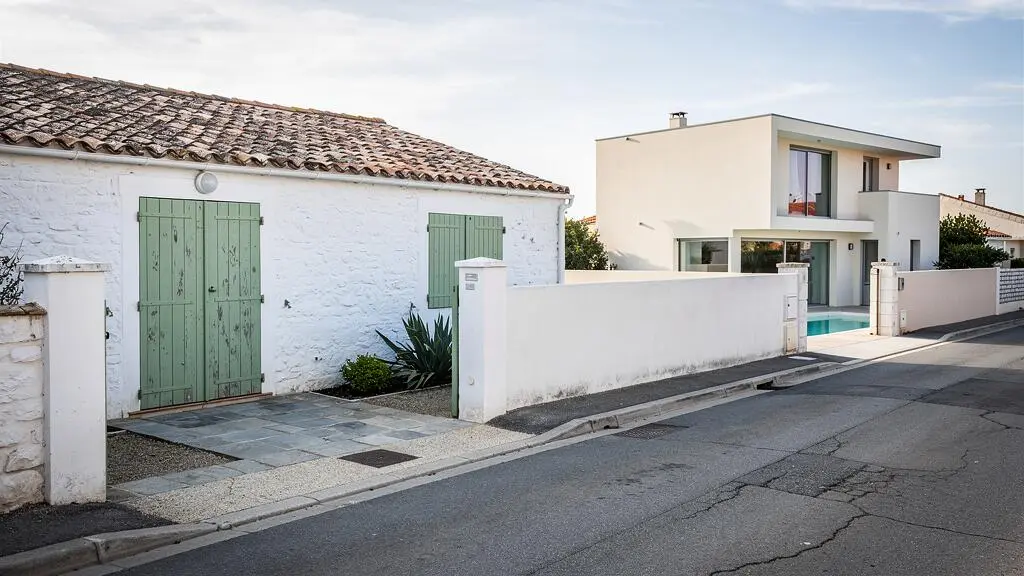
Choosing between a traditional fishermen’s cottage and a contemporary villa shapes your entire stay on the Île de Ré. Both offer authentic island experiences, yet they differ fundamentally in atmosphere, space, amenities and price. The right choice depends not on which type of property ranks higher in an abstract hierarchy, but on how closely each aligns with your budget, the size and composition of your group, the ambiance you seek and the time of year you plan to visit. This guide weighs the defining characteristics of each option against the practical constraints faced by holidaymakers, so you can book with confidence and avoid disappointment.
What exactly is a fishermen’s cottage on the Île de Ré?
A traditional fishermen’s cottage on the Île de Ré is immediately recognisable by its whitewashed stone walls, distinctive green shutters and compact footprint. These single- or two-storey houses cluster in the island’s historic villages, typically arranged around a small walled courtyard or garden. The uniform colour scheme—white lime render and weathered green woodwork—reflects a long-standing local building tradition rooted in the island’s maritime heritage.
According to Sites et Cités remarquables de France, three Zones de Protection du Patrimoine Architectural, Urbain et Paysager protect Saint-Martin-de-Ré, La Flotte-en-Ré and Sainte-Marie-de-Ré. These architectural preservation rules explain why the cottages have maintained their traditional appearance and why owners must respect strict guidelines when renovating facades, shutters and rooflines. A ministerial response published by the Assemblée nationale confirms that the Île de Ré has been inscribed in the national inventory of protected sites since 23 October 1979, further limiting interventions that could alter the island’s built heritage.
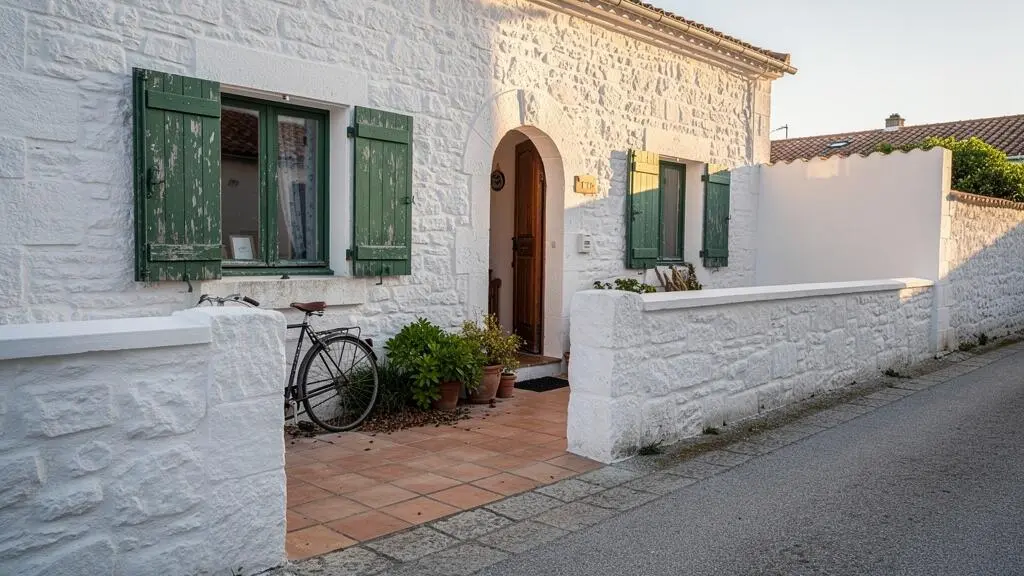
Inside, these cottages typically feature compact rooms with thick stone walls that keep interiors cool in summer. Original floor plans often include a ground-floor kitchen and living area opening onto the courtyard, with one or two bedrooms upstairs reached by a narrow wooden or stone staircase. Many have been renovated to include modern bathrooms and updated kitchens, though the small scale and traditional layout remain. The compact dimensions and village setting mean limited outdoor space—often a walled courtyard rather than a large garden—and sometimes restricted natural light in ground-floor rooms due to the small windows traditional to this architectural style.
What makes a modern villa different?
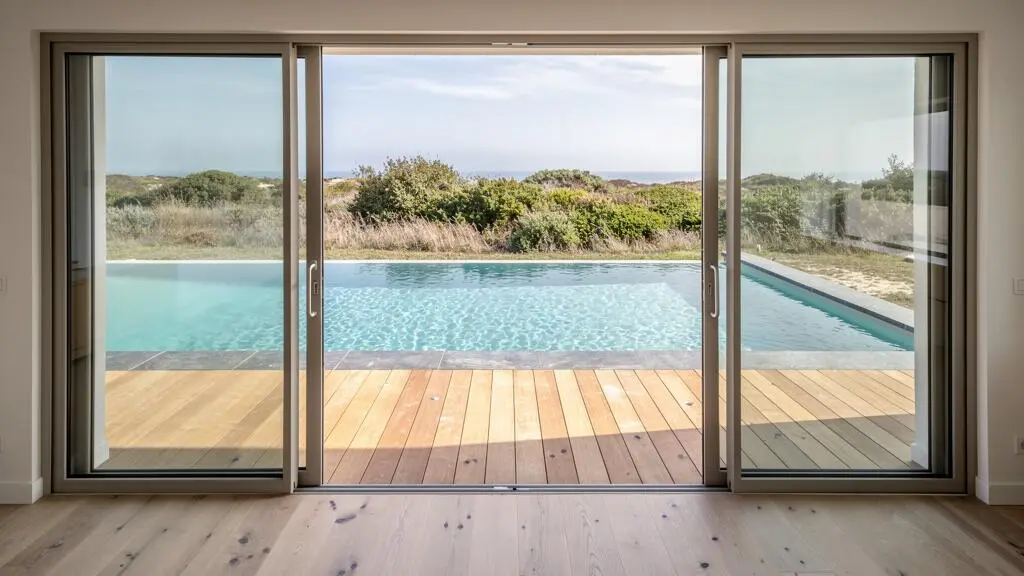
Contemporary villas on the Île de Ré offer a markedly different experience centred on space, light and modern comfort. These properties typically feature open-plan living areas, floor-to-ceiling glazing, generous outdoor spaces and amenities such as private swimming pools, outdoor dining terraces and landscaped gardens. Built or extensively renovated in recent decades, they incorporate modern insulation, air conditioning, fully equipped kitchens with high-end appliances and spacious bathrooms with contemporary fixtures.
Where a traditional cottage might accommodate two to four guests across 60 to 80 square metres, a modern villa often houses six to eight people comfortably across 120 to 200 square metres or more. The layout favours fluid indoor-outdoor living, with sliding glass doors opening onto wooden decking, poolside lounging areas and outdoor kitchens. Bedrooms tend to be larger, often with en-suite bathrooms, and the villas usually sit in quieter residential zones or on the edges of villages rather than within the historic cores.
If you are comparing accommodation types across the island, ce lien presents the full range of holiday rentals available on the Île de Ré, including both traditional cottages and contemporary villas, with detailed descriptions, photographs and availability calendars to help you assess which properties match your requirements.
Cottage vs villa at a glance
- Cottages offer compact, characterful village settings with thick walls and courtyard gardens; villas provide spacious, light-filled interiors with pools and modern amenities.
- Cottages suit couples or small families seeking authenticity and proximity to village life; villas accommodate larger groups prioritising comfort and private outdoor space.
- Preservation rules protect cottage facades and limit external alterations; villas typically occupy less-regulated residential zones with greater design freedom.
- Both types can be well maintained and equipped, but the ambiance, layout and capacity differ fundamentally.
Fishermen’s cottage vs modern villa: weighing charm against comfort
The choice between a cottage and a villa hinges on several practical criteria: your budget, the number of people travelling, the atmosphere you value most, the importance of specific amenities and the season in which you visit.
Budget and value for money
Traditional cottages generally command lower weekly rates than villas of equivalent sleeping capacity, particularly outside peak season. A two-bedroom cottage in a village such as Ars-en-Ré or La Flotte-en-Ré typically costs less per week than a four-bedroom villa with a pool, though prices vary widely depending on location, condition and the specific amenities offered. However, value for money depends on what you prioritise: a cottage offers authentic island character and proximity to markets, cafés and cycling routes, while a villa delivers more space, privacy and modern conveniences that justify the premium for groups who value those features.
Space, capacity and group composition
If you are a couple or a family of three or four comfortable with cosy interiors and happy to spend much of your time cycling, at the beach or exploring villages, a cottage provides ample character without wasted space. Larger families, groups of friends or multi-generational gatherings often find villas more practical: separate bedrooms with en-suite bathrooms reduce morning bottlenecks, open-plan living areas accommodate group meals and children can play safely in a private garden or pool area while adults relax on the terrace.
Atmosphere and experience
Cottages immerse you in the island’s centuries-old architectural identity. Waking up in a whitewashed house with green shutters, stepping into a village lane where neighbours greet you in the morning and cycling to the harbour for fresh oysters feels quintessentially rétais. The compact scale encourages you to spend time outdoors and engage with village rhythms. Villas, by contrast, create a private, self-contained holiday environment where you control the pace: mornings by the pool, lunch on your own terrace and the freedom to enjoy contemporary comforts such as air conditioning on hot August afternoons or underfloor heating if you visit in spring or autumn.
Seasonal considerations
In high season—July and especially August—both property types see strong demand and higher prices, but villas with pools book earliest and command the steepest premiums. Cottages in the most sought-after villages such as Saint-Martin-de-Ré, Ars-en-Ré and La Flotte-en-Ré also fill quickly. Booking several months in advance becomes essential for either option during these peak weeks. Outside high season, cottages offer better value and availability, while some villa owners reduce rates significantly to attract bookings in May, June, September and October, when the island’s mild climate and quieter beaches still appeal but a private pool becomes less critical.
- Couples or small families (two to four people) prioritising authenticity and village atmosphere:A fishermen’s cottage in Saint-Martin-de-Ré, Ars-en-Ré or La Flotte-en-Ré places you at the heart of island life, close to cycling routes, markets and harbours.
- Larger families or groups (six to eight people) seeking space, privacy and modern amenities:A contemporary villa with a pool, open-plan living and multiple bathrooms offers comfort and independence, typically in quieter residential areas.
- Budget-conscious travellers visiting outside July and August:Cottages provide excellent value in shoulder seasons, with charm and proximity to attractions without the peak-season premium.
- Groups with young children or those planning to spend significant time at the property:Villas with pools, gardens and flexible indoor-outdoor spaces accommodate varied needs and reduce logistical friction.
Which villages and areas suit each type of rental?
The Île de Ré’s ten communes each have distinct characters, and the type of rental you choose often correlates with the village or area in which it sits.
Saint-Martin-de-Ré, the island’s historic capital, offers the greatest concentration of traditional cottages within its fortified old town and narrow streets lined with whitewashed houses. The village provides immediate access to shops, restaurants and cultural sites, with cycle paths radiating to beaches and neighbouring villages. Villas here are rarer and typically occupy plots on the edges of the commune.
Ars-en-Ré, designated among the Most Beautiful Villages of France according to Destination Île de Ré, features picturesque lanes filled with cottages clustered around the distinctive black-and-white church tower. The village’s compact core and thriving market make it ideal for those seeking an authentic, walkable setting. Modern villas sit in residential zones beyond the historic centre.
Les Portes-en-Ré, at the island’s northern tip, combines a working harbour, marshlands and proximity to the Phare des Baleines lighthouse. Cottages here offer a quieter, end-of-the-island atmosphere, while newer villas occupy residential developments near beaches and nature reserves.
Destination Île de Ré reports that the island features more than 138 kilometres of cycle paths linking all villages to beaches, forests and salt marshes. Cottages in village cores put you within a few minutes’ ride of shops and coastal paths, while villas in residential zones or near Bois-Plage-en-Ré, Sainte-Marie-de-Ré or Rivedoux-Plage offer easy cycling access to the island’s southern and eastern beaches.
If you are planning a broader Atlantic coast holiday and considering other seaside destinations, the Atlantic coast seaside guide explores alternative locations and accommodation styles along France’s western shoreline.
How do you book the right rental without surprises?
Securing a rental that matches your expectations requires careful scrutiny of listings, direct communication with owners or agencies and a clear understanding of what to verify before committing.
Essential checks before booking
- Review multiple photos showing every room, outdoor spaces and the immediate surroundings, not just curated highlights.
- Confirm the exact number of bedrooms, beds, bathrooms and sleeping arrangements to ensure capacity matches your group.
- Check the detailed equipment list: Wi-Fi, air conditioning or fans, washing machine, dishwasher, outdoor furniture, bicycles and pool safety features if applicable.
- Read recent reviews critically, noting recurring mentions of cleanliness, accuracy of descriptions, responsiveness and any issues with noise, space or amenities.
- Clarify cancellation terms, deposit requirements, cleaning fees and any additional charges for linen, electricity or tourist tax.

Questions to ask before you book
Contacting the owner or agency directly allows you to clarify details that listings sometimes omit. Ask about the distance to the nearest beach and whether it is accessible by cycle path. Confirm whether bicycles are included or available to rent nearby. If you are booking a cottage, ask about ceiling heights, window sizes and natural light in living areas, as some older properties can feel darker than modern homes. For villas, verify pool dimensions, fencing and safety features if you travel with young children. Confirm arrival and departure times, key collection procedures and the owner’s or agency’s availability during your stay should any issue arise.
Reading reviews critically
High overall ratings matter less than the specific content of recent reviews. Look for mentions of accuracy: did the property match the photos and description? Check whether previous guests commented on cleanliness, maintenance and the responsiveness of the owner or property manager. Be alert to repeated complaints about noise from nearby roads or neighbours, insufficient hot water, uncomfortable beds or misleading claims about proximity to beaches or villages. A handful of neutral or negative reviews among many positive ones is normal, but patterns of similar complaints warrant caution.
For practical advice on organising your journey and what to pack for an island cycling holiday, consult travel preparation tips to ensure you arrive ready to enjoy your stay from the first day.
Final tips for choosing your Île de Ré rental
Your decision between a traditional fishermen’s cottage and a modern villa rests on how each property type aligns with your budget, the size and composition of your group, the atmosphere you seek and the time of year you visit. Cottages deliver authentic island character, village proximity and typically lower rates, making them ideal for couples or small families who value charm and immersion in local life. Villas provide space, privacy, modern amenities and self-contained comfort, suited to larger groups or those prioritising contemporary convenience and private outdoor areas.
Neither option is objectively superior; both can deliver memorable holidays when chosen thoughtfully. Book early if you plan to travel in July or August, scrutinise listings carefully, ask direct questions and verify that photos, descriptions and reviews align with your expectations. By matching your practical constraints to the strengths of each property type, you maximise the chance of arriving at a rental that feels exactly right for your stay on this distinctive Atlantic island.